
How Often to Paint a House Exterior on Cape Cod
· By Lucas Evangelista Rassilan
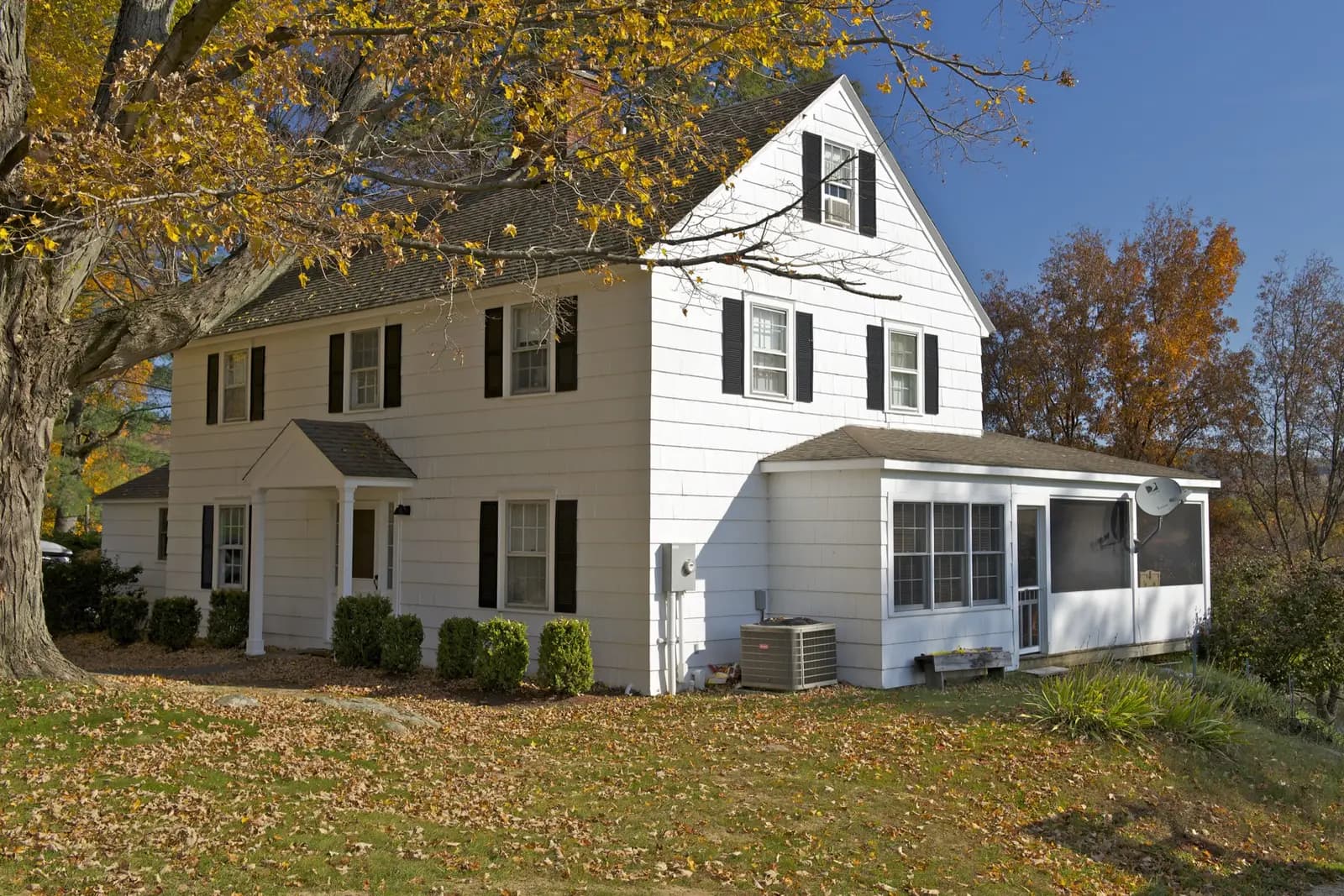
Most paint manufacturers publish a simple seven-to-ten-year rule for exterior repaints. That rule was written for the Midwest. On Cape Cod, salt air rolls in off the Atlantic every day, nor'easters drive rain sideways into every gap in your siding, and summer sun reflects off the water with unusual intensity. Those conditions can cut a standard paint job's life nearly in half.
The right answer to how often you should repaint depends on what your siding is made of, which direction the wall faces, and how well the last paint job was prepped and applied. This guide breaks it down so you can build a realistic schedule and stop guessing when to call a painter.
Why Coastal Climate Is Harder on Paint Than Most Places
Salt does not just sit on the surface. Fine particles suspended in the air land on your siding continuously, work into microscopic gaps in the paint film, and speed up oxidation. Even homes several miles inland in towns like Sandwich or Bourne see elevated salt exposure when wind comes in off the bay.
High humidity compounds the problem. Moisture gets behind paint film through wood grain, nail holes, and unsealed trim. When the sun heats the siding the following day, that moisture expands. Repeated cycles of expansion and contraction cause blistering and peeling far faster than you would see in a drier climate.
Repaint Intervals by Siding Type
Wood clapboard siding is the most common material on older homes in the region, and it typically needs repainting every five to seven years. Oil-based primers extend that window; latex-only systems on bare wood tend to fail sooner. The critical variable is preparation: a fully stripped and primed repaint lasts longer than coating over chalking old paint.
Cedar shingle siding, found on homes from Truro to Chatham, works differently. Stained cedar needs refreshing every three to five years. Painted cedar shingles hold up six to eight years before they need attention. Natural (unstained) cedar that has gone gray is not failing; it is weathered and can be stained any time you want to restore color.
Fiber cement siding such as HardiePlank can go ten to fifteen years between repaints if the job was done with a quality primer and 100% acrylic topcoat. Vinyl siding rarely needs painting, but if the color has faded significantly, a bonding primer and exterior acrylic can last eight to twelve years before the next coat is needed.
Which Sides of Your House Fail First
South-facing and west-facing walls take the most UV during peak hours. The paint fades, chalks, and starts to crack noticeably faster than on the shaded sides. If you have noticed peeling concentrated on one wall while the rest of the house looks fine, sun exposure is almost always the reason.
North-facing walls see the opposite problem. They stay damp longer in the morning, dry out slowly, and are the first place mildew and mold staining appears. Ocean-facing walls get the most direct salt loading. Prioritizing prep on these high-exposure walls during a repaint, including a mildewcide wash on north sides, can add a year or two to the life of the job.
Warning Signs That Mean It Is Time, Regardless of Your Schedule
Chalking is the first sign to watch for. Run your hand across the siding: if white or gray powder transfers to your palm, the paint binder has broken down and water is now getting into the wood. At that point, waiting another season makes the prep work harder and the eventual cost larger.
Peeling back from edges, cracking along the grain of wood, and gaps opening in caulk around windows and door trim all mean moisture is already moving behind the paint film. Bare wood exposed to weather for more than one season can begin to soften, turning what would have been a straightforward paint job into a repair project.
Decks and Fences: A Shorter Cycle
Horizontal surfaces take far more punishment than walls. A deck faces direct rain, standing water, foot traffic, and full sun. Deck stain on pressure-treated lumber typically lasts two to four years on the Cape before it starts to gray, flake, or absorb water noticeably. Semi-transparent stains show wear before they fail; solid stains hide wear longer but require more prep at the next application.
Painted fences and railings follow a similar pattern. A fence facing west with afternoon sun typically lasts three to four years between coats. Painted railings on a covered porch can go closer to seven years. The difference comes down almost entirely to how much direct weather exposure the surface gets.
How to Get More Years Out of Each Paint Job
Preparation accounts for the majority of how long a paint job lasts. Power washing to remove salt, chalk, and biological growth before painting, followed by spot priming bare wood and re-caulking every penetration, can add two to three years to any paint job. Skipping prep to save time on the job is the most common reason a repaint fails early.
Quality of paint matters too. A premium 100% acrylic exterior paint costs more per gallon but resists UV and moisture significantly better than a builder-grade product. The price difference across a full house is typically a few hundred dollars, while the lifespan difference can be two to three years. That math almost always favors the better product.
Building Your Repaint Schedule
A practical approach is to walk around your house once a year, ideally in spring after the winter storms have passed. Check the south and ocean-facing walls for chalking and cracking. Look at the north side for mildew staining. Check all caulk lines around windows and trim. After a couple of years you will know which walls on your house are on a faster cycle than the others.
If you have spotted warning signs or simply are not sure where your home stands, Coastal Premium Painting offers free estimates with no visit fee and same-day response. Call (508) 299-9510 or use the contact form on this site to schedule a walkthrough and get a straight answer on what your house actually needs.
Frequently asked questions
- How often should I repaint the exterior of my house?
- For most wood-sided homes, five to seven years is a reasonable target, though homes closest to salt water often see that shortened to four to five years. Fiber cement siding can go ten to fifteen years. The honest answer is to watch for the warning signs (chalking, peeling, failing caulk) rather than relying on the calendar alone.
- Does cedar shingle siding need to be painted or stained?
- Cedar shingles can be painted or stained, and both options work. Stain penetrates the wood and tends to peel less aggressively when it fails; plan to restain every three to five years. Paint forms a surface film that lasts six to eight years but requires more prep at the next application. Neither choice is wrong for a coastal New England climate.
- Why is one side of my house peeling while the rest looks fine?
- Direction is usually the cause. South and west walls get the most UV, which breaks down paint binders faster. Ocean-facing walls carry more salt loading. If the peeling side is north-facing, the culprit is typically moisture that is not drying out fast enough. Each problem has a specific prep solution, which is why a walkthrough tells you more than a general schedule.
- Can I do spot repairs instead of a full repaint?
- Spot priming and touching up works well if the failing area is isolated and the rest of the paint film is still sound. If more than twenty percent of a wall shows chalking or adhesion failure, spot repairs tend to look patchy and may not hold. At that point, repainting the full wall section is typically the more cost-effective path.
Related services
Found this helpful? Make us a preferred source on Google.
Ready for an exact price?
Get a free, no-pressure in-home estimate. Real numbers for your home, not a phone guess.