
How to Remove Moss From Your Roof and Clear Black Streaks
· By Lucas Evangelista Rassilan
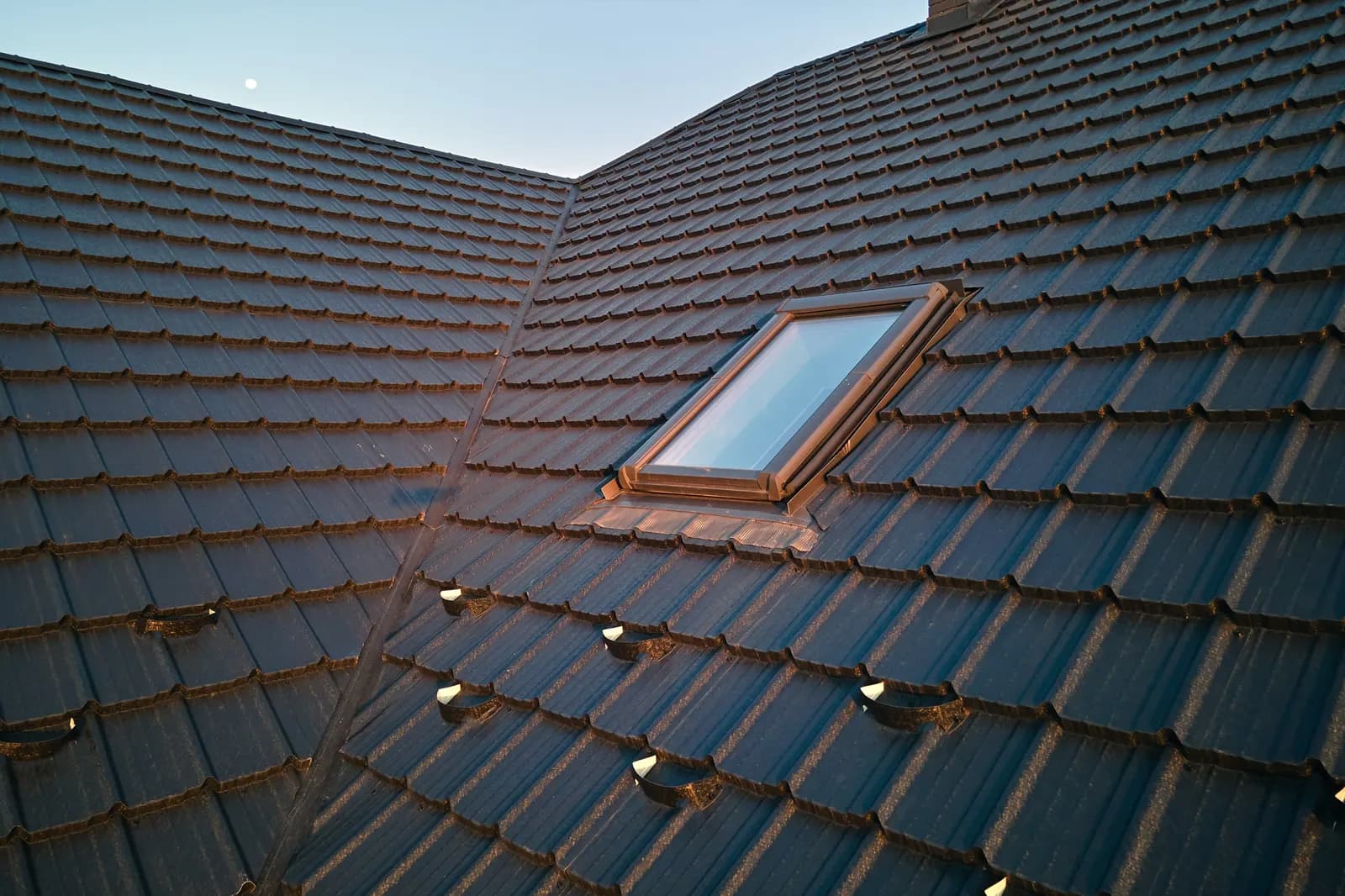
If your roof has dark vertical streaks running down from the ridge, or patches of green and brown fuzz hugging the north slope, you are dealing with two separate problems: algae staining and moss growth. Both are common on roofs in coastal New England, and both cause more damage over time than most homeowners expect.
The good news is that neither requires a roof replacement to fix. Removing them safely comes down to using the right method, and understanding why the wrong method can leave you worse off than before.
What Are the Black Streaks on Your Roof?
The dark stains running vertically down asphalt shingles are almost always caused by a cyanobacteria called Gloeocapsa magma. It is not mold or mildew. It is a living organism that feeds on the limestone filler manufacturers use in asphalt shingles. As it feeds and spreads, it leaves behind a dark pigmented sheath that shows up as the streaks you see.
The streaks typically start near the ridge and travel downward with rain runoff. Left alone, the bacteria gradually break down the granules on your shingles, the same granules that protect the asphalt from UV rays and water penetration. What starts as a cosmetic stain becomes a structural issue if ignored long enough.
What Is the Moss Growing on Your Shingles?
Moss is a non-vascular plant that colonizes surfaces wherever moisture and shade combine. On roofs, it most often appears on north-facing slopes or under overhanging tree branches. It starts as a thin green film and can grow into a thick, spongy mat several inches deep over the course of years.
Unlike algae staining, moss physically lifts shingle edges as it grows underneath them. That gap allows water to get under the shingles during rain events and freeze-thaw cycles. In New England winters, that trapped moisture expands and contracts repeatedly, accelerating shingle deterioration and shortening your roof's service life significantly.
Why Cape Cod Roofs Are Especially Vulnerable
Cape Cod's climate creates near-ideal conditions for both algae and moss. Ocean humidity, frequent fog, salt air, and dense tree cover over older neighborhoods mean roofs stay damp far longer than they would in drier inland climates. Cedar shake roofs absorb moisture readily, but asphalt shingles in the same conditions are not immune.
North-facing roof sections get the least sunlight and the most persistent moisture. Roofs on wooded lots, properties near ponds, or homes with large mature trees overhanging are almost certain to develop growth within a few years without some form of preventive treatment.
Soft Washing vs. Pressure Washing: Which One Is Safe?
Soft washing uses a low-pressure application of a diluted cleaning solution, typically sodium hypochlorite combined with a surfactant. The solution kills algae and moss at the cellular level. After a dwell period of 15 to 30 minutes, the roof is rinsed with low-pressure water. The black streaks often continue to lighten over the following weeks as dead organic matter washes away with rain.
Pressure washing uses high-pressure water to blast debris off surfaces. On a concrete driveway or patio that is effective. On asphalt shingles it is destructive: the pressure strips the protective granules off the shingle surface and can dislodge tabs. The Asphalt Roofing Manufacturers Association recommends soft washing specifically because high pressure damages the shingle structure. Many roofing manufacturers void their product warranty if the roof is pressure washed. Soft washing is the correct method, period.
How Long Does Roof Cleaning Last?
After a proper soft wash treatment, most roofs stay clean for two to four years. The actual interval depends on the amount of shade over the roof, the density of nearby trees, and proximity to water or fog-prone areas. A heavily shaded roof on a wooded lot will regrow algae faster than an open, south-facing roof.
One option to extend the interval is a copper or zinc strip installed near the ridge after cleaning. As rain washes over the metal, it releases ions that inhibit future algae and moss growth. This does not eliminate regrowth entirely, but it can meaningfully stretch the time between treatments for roofs in high-growth environments.
Should You DIY Roof Cleaning?
Some homeowners attempt this with store-bought bleach and a garden sprayer. The chemistry is similar to what professionals use, but the execution introduces serious risks. Working on a wet, sloped surface with a loaded backpack sprayer is a significant fall hazard. Overspray onto landscaping, painted siding, or neighboring surfaces can cause staining or plant damage that costs more to repair than the cleaning itself.
Getting the dilution ratio right matters too. A solution that is too weak will not kill the growth effectively, and you may be retreating the roof in a few months. Too strong a mix can discolor or etch shingles. Professionals bring calibrated equipment, correct dilution rates, and proper protection for surrounding vegetation and surfaces.
What to Expect From a Professional Roof Cleaning
Before work begins, a thorough contractor will inspect the roof to assess the extent of growth, identify any existing shingle damage, and cover or pre-wet plantings near the foundation. The soft wash application itself takes one to two hours for most residential roofs. Results are visible quickly, though algae stains sometimes continue to lighten over the following two to four weeks as rain finishes rinsing away dead material.
Heavy moss may require a follow-up visit, since thick growth does not always shed from the shingle surface immediately after treatment. A reputable contractor will tell you upfront if that is likely based on what they see during the inspection.
Coastal Premium Painting offers free estimates with same-day response for roof cleaning throughout Cape Cod and the surrounding region. Call (508) 299-9510 or use the contact form to schedule an inspection.
Frequently asked questions
- Does moss actually damage my roof, or is it just an appearance problem?
- Moss causes real structural damage over time. It grows under shingle edges, lifting them and creating gaps for water to enter. During New England's freeze-thaw cycles, that trapped moisture expands and contracts repeatedly, accelerating shingle deterioration. What looks cosmetic can shorten your roof's service life by several years if left untreated.
- How often should I have my roof cleaned?
- For most roofs in this region, every two to four years is a reasonable interval. Roofs under heavy shade or near water tend to need attention more frequently. After a cleaning, your contractor can give you a more precise estimate based on how quickly growth is returning on your specific roof.
- Will soft washing damage my gutters, siding, or landscaping?
- A properly executed soft wash uses diluted solutions at low pressure, so it should not damage well-maintained gutters or vinyl siding. Plants near the foundation are the main concern. Professionals typically wet down surrounding vegetation before applying the solution and rinse it thoroughly afterward. If you have sensitive or ornamental plantings, mention them when you schedule the work.
- Can I pressure wash my roof to save money?
- Pressure washing is not recommended for asphalt or cedar shake roofs. The high pressure strips granules from asphalt shingles and can physically dislodge cedar shakes. Many roofing manufacturers void their warranty if the roof is pressure washed. Soft washing achieves better results without the physical damage, making it the only method worth using on a shingle roof.
Related services
Found this helpful? Make us a preferred source on Google.
Ready for an exact price?
Get a free, no-pressure in-home estimate. Real numbers for your home, not a phone guess.